
What Is a Pet Sitter? Understanding Pet Sitting, Boarding, and Florida’s Rules
When you’re looking for someone to care for your pets, the terms pet sitting, home boarding, and kennel care can get confusing. They’re often used interchangeably, even though they describe different care arrangements. Understanding those differences helps you choose the right environment for your pet—and know what questions to ask before booking.
Start with one simple question: “Will my pet stay in my home or yours?”
The dictionary definition of pet sitting
Dictionary.com, drawing from the Random House Unabridged Dictionary, defines pet sitting as:
“the act of caring for a pet in its own home while the owner is away.”
Pet Sitters International also describes pet sitting as care provided in the pet’s own home and distinguishes that service from boarding pets at a caregiver’s residence or a kennel.
Under these definitions, a pet sitter comes to your pet. When your pet stays at the caregiver’s home or a facility, the service is boarding.
A business may offer both, but the arrangements should be clearly identified. The distinction matters because the care environment, insurance needs, and applicable requirements can differ.

What does a pet sitter do?

Depending on your agreement and your pet’s needs, pet sitting may include:
- Preparing meals and refreshing water.
- Providing walks and potty breaks.
- Cleaning litter boxes and pet-related messes.
- Giving medications as agreed.
- Offering companionship, playtime, and enrichment.
- Monitoring appetite, behavior, and bathroom habits.
- Sending updates to your family.
Care may involve scheduled visits or an overnight stay in your home. Discuss the exact schedule: an overnight booking should clearly explain when the caregiver arrives, when they leave, and what daytime care is included.
Pet sitting versus boarding
| Service | Where your pet stays | Details to confirm |
| Pet sitting | Your home | Visit frequency, duration, duties, and time alone |
| Overnight pet sitting | Your home, with a caregiver staying overnight | Overnight hours and daytime coverage |
| Home boarding | The provider’s residence | Other animals, supervision, property approval, and boarding insurance |
| Facility boarding | A dedicated boarding facility or kennel | Staffing, housing, exercise, and emergency procedures |
| Dog daycare | A provider’s home or facility during the day | Group size, compatibility, rest periods, and supervision |
The phrase “in-home care” can be ambiguous. Always ask whose home the provider means.
What does Florida require?
Florida’s Department of Business and Professional Regulation lists animal boarding outside a veterinary clinic among services that do not require a DBPR professional license. However, the department directs businesses to check county and city requirements as well. The absence of a DBPR license requirement does not eliminate local obligations.
Depending on the location and operation, providers may need to address business tax receipts, zoning or use approval, animal-related requirements, and property restrictions.
If someone advertises as “licensed,” ask:
“What license or approval do you hold, who issued it, and does it apply to the service you provide at this address?”
An LLC registration, professional certification, business tax receipt, and approval to board animals are different things. Ask for documentation relevant to the actual service.

Boarding in a house can still be a regulated business activity

A boarding service does not have to look like a traditional kennel to raise zoning questions.
For example, Orange County’s zoning definition of a kennel includes premises where animals are boarded for a fee, subject to stated exceptions. The county also directs applicants to verify whether their proposed business use is permitted at the location. orangecounty-fl.elaws.us
Calling the service “pet sitting” does not determine how local authorities classify it.
Providers should accurately describe their operation when checking requirements, including how many animals they accept, whether pets from different households share space, and how indoor and outdoor areas are used.
For families in Horizon West, Winter Garden, Windermere, and nearby communities, the appropriate authority depends on the property’s actual jurisdiction.
Does Florida’s home-based business law allow home boarding?
Florida Statute §559.955 protects qualifying home-based businesses and limits certain local government restrictions. It also establishes conditions involving parking, residential character, and business activities remaining secondary to the property’s residential use.
The statute expressly preserves certain condominium, cooperative, and homeowners’ association restrictions. It should not be treated as automatic permission for every boarding operation at every residential property.
A provider should verify how the law applies to their specific operation and check applicable lease, landlord, and community restrictions.

What should you ask before choosing home boarding?
A welcoming house and fenced yard can look appealing, but you also need to understand how care works behind the scenes.
Ask about:
- Animal numbers: How many guest and resident pets will be present during your dates?
- Compatibility: How are pets assessed before sharing space?
- Separation: Can animals be safely separated for meals, sleep, illness, or disagreements?
- Supervision: How long are pets left alone, and who takes responsibility when the provider leaves?
- Household members: Will children, visitors, roommates, or other caregivers interact with your pet?
- Escape prevention: How are doors, gates, fences, and arrivals managed?
- Sleeping arrangements: Where will your pet sleep? Will crates or separate rooms be used?
- Emergencies: What happens during a medical emergency, power outage, hurricane, or evacuation?
Ask to see the areas where your pet will actually stay, including sleeping spaces and outdoor areas. Discuss your pet’s behavior honestly so both you and the provider can assess whether the arrangement is suitable.
Insurance needs to match the service

“Insured” should come with an explanation of what is covered.
Insurance for visits in clients’ homes does not automatically establish coverage for boarding at the provider’s residence. Some insurers offer a specific endorsement for care in the provider’s home and require applicable licenses and permits. Actual coverage depends on the policy’s terms, limits, and exclusions.
Ask:
- Does your policy cover paid boarding at this address?
- Does it include coverage for pets in your care, custody, or control?
- Are there limits involving animal numbers or particular activities?
- Can you provide current proof of coverage?
A general statement about insurance or an app listing should not replace a clear answer about the service you are booking.
Health policies matter, too
Florida generally requires dogs, cats, and ferrets four months of age or older to be vaccinated against rabies. The law allows a written veterinary exemption when vaccination would endanger the animal’s health.
For boarding, ask about vaccination policies, illness screening, cleaning procedures, parasite prevention expectations, and arrangements for separating sick animals. Your veterinarian can help you assess your individual pet’s needs.
Be cautious when answers are unclear
Reviews and personal recommendations can be helpful, but they should be part of your research.
Take a closer look if a provider:
- Won’t disclose how many animals will be present.
- Refuses to show where your pet will stay.
- Gives conflicting answers about supervision.
- Cannot explain what “licensed and insured” means for their service.
- Asks you to conceal the boarding arrangement from a landlord, association, or local authority.
- Changes the care location or caregiver without discussing it with you.
Look for transparency, a written agreement, and a provider who welcomes reasonable questions.
Choose care with confidence
Pet sitting keeps your pet in familiar surroundings. Boarding provides care in another home or facility. Both require thoughtful planning, clear expectations, and appropriate safeguards.
Know where your pet will stay, who will care for them, and how their needs will be met. Those details are essential to making an informed choice.
At The Savvy Sitter, Pet Sitting and Dog Walking, LLC, we believe education is part of caring for pets and their families. If you’re exploring pet care in Horizon West, Winter Garden, or Windermere, reach out to discuss your pet’s routine and needs. We’re happy to help you understand your options and the questions worth asking. 💜🐾
Requirements vary by jurisdiction and may change. Confirm property-specific rules with the appropriate city or county.
About the Author:

Savanna Westwood
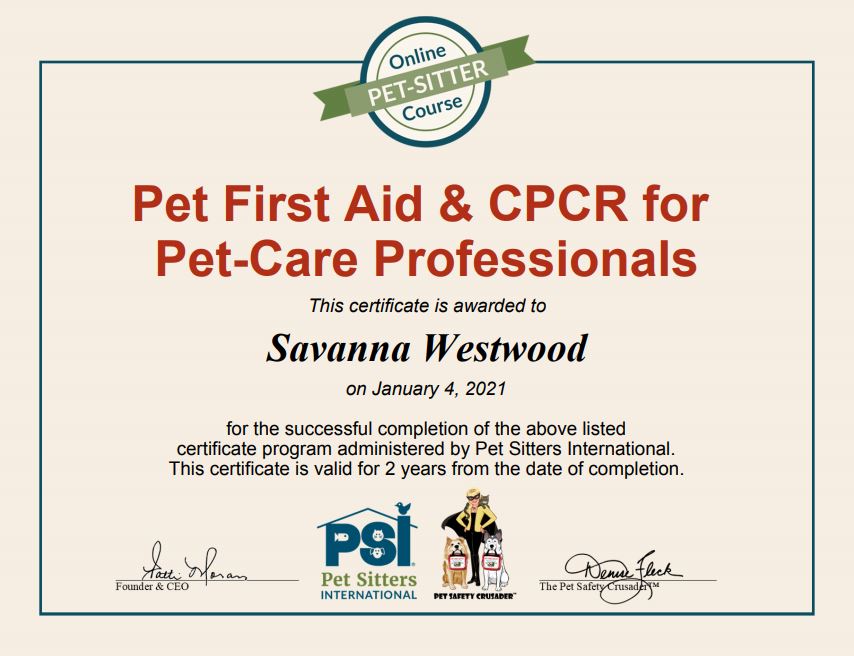
Savanna Westwood is the Owner and Founder of The Savvy Sitter, Pet Sitting and Dog Walking, LLC. She has grown up with animals all her life and enjoys spending time with them. Savanna has lived in the Winter Garden and Windermere Area for over 30 years. When she is not taking care of Fur Friends, one can find her reading, practicing archery, riding, and devising ways to provide additional and excellent services to clients. Savanna is a Certified Professional Pet Sitter with Pet Sitter International's CPPS certification and also holds certification in Pet First Aid and CPCR for Pet-Care Professionals.